This Day in Golf History: March 7
The Day Golf Got Its First Rules
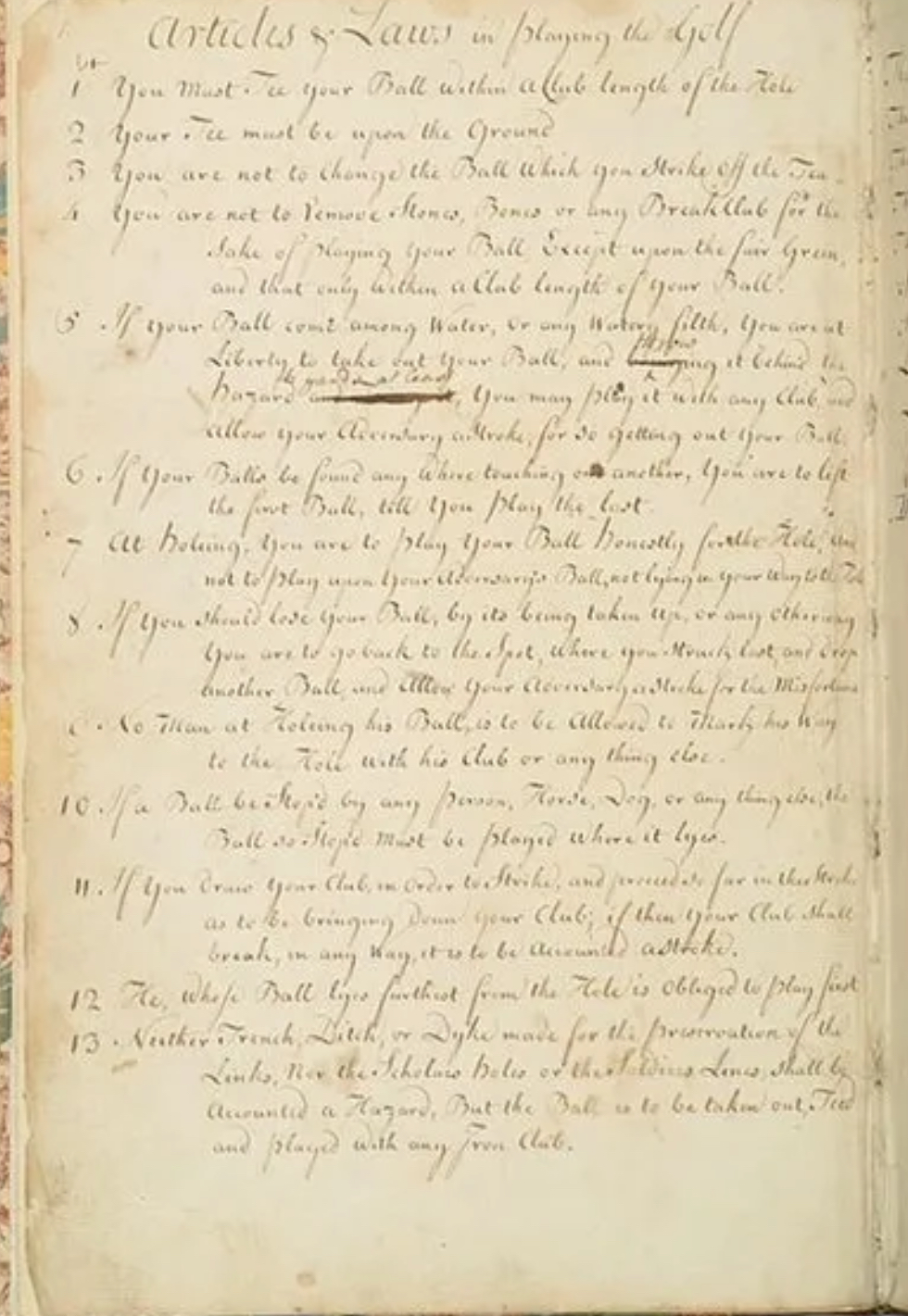
Every sport needs a rulebook, but golf had to start somewhere. That somewhere was Leith Links in Scotland, and the date was March 7, 1744.
The Gentlemen Golfers of Leith gathered that day and did something that would carry through nearly three centuries of golf history: they wrote down the game’s first known rules. All 13 of them. These weren’t suggestions or guidelines handed down by oral tradition. They were actual written rules, created for competition at Leith Links, and they became the foundation for everything that followed.
Think about that for a moment. Every rule we debate today, every penalty we grumble about, every discussion about what’s fair and what isn’t traces back to those 13 original rules penned on this date. The USGA recognizes this as one of the most significant moments in golf’s development, and rightfully so. Without March 7, 1744, we’d have chaos instead of championships.
Golf Returns to the Olympics
Fast forward 268 years to March 7, 2012, and golf made headlines again with another historic decision.
On this date, organizers announced that Gil Hanse and Amy Alcott would design the Olympic golf course for the 2016 Rio Games. This wasn’t just another course design project. Golf hadn’t been part of the Olympics since 1904, making this selection an important moment in the sport’s global expansion.
The Hanse-Alcott team faced the challenge of creating a course worthy of golf’s return to the world’s biggest sporting stage. Their design would introduce the game to new audiences and showcase golf to billions of viewers globally. March 7, 2012, marked the beginning of that journey, cementing the date as important not just for what happened in golf’s distant past, but for its modern future as well.
Remembering Dan Jenkins
March 7, 2019, brought sad news to the golf world. Dan Jenkins, one of the most influential voices the game has ever known, died at age 90.
If you’ve ever laughed at a golf story, appreciated sharp tournament coverage, or enjoyed writing that captured the game’s personality rather than just its scores, you’ve felt Jenkins’ influence. Golf Digest and Sports Illustrated were his platforms, but his contribution reached far beyond any single publication.
Jenkins didn’t just report on golf. He made you feel like you were there, standing on the 18th green or sitting in the press tent. His humor was biting, his observations were keen, and his devotion to the game was clear in every sentence. For anyone who cares about golf storytelling, March 7 serves as a reminder of what we lost when Jenkins passed, and what he gave us during his remarkable career.
Tom Lehman’s Birthday
Born on March 7, 1959, Tom Lehman carved out a career that’s unique in professional golf.
Lehman won the 1996 Open Championship at Royal Lytham & St Annes and reached World No. 1. But here’s what makes him truly distinctive: he’s the only golfer ever named Player of the Year on three different tours: the Ben Hogan Tour (now Korn Ferry Tour), the PGA Tour, and the Champions Tour.
That’s not just longevity. That’s excellence at every level of professional golf. Lehman proved himself as a developmental player, as a tour star in his prime, and as a champion in the senior ranks. His birthday reminds us that great careers aren’t always about early success. Sometimes they’re about persistence, improvement, and sustained excellence across decades.
Mr. 55
Here’s a fun one for March 7: Homero Blancas was born on March 7, 1938.
Blancas had a solid professional career, but he’s remembered for something that happened in college. Playing for the University of Houston in 1962, Blancas shot 55 in the Premier Invitational in Longview, Texas. Yes, 55. That’s 15 under par on a par-70 course.
The round included 13 birdies and one eagle. No bogeys. It remains one of the most famous ultra-low rounds in competitive golf history, earning Blancas the nickname “Mr. 55.” While controversies continue about the legitimacy of various low-score records, Blancas’ round is a remarkable achievement and a great piece of golf lore.
March 7 might not be the most famous date on the golf calendar, but it’s packed with history worth remembering.
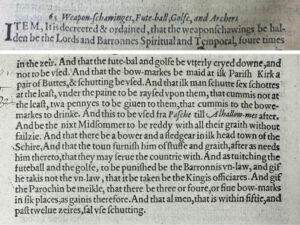
While it’s one day late, on March 6th, 1457 the game of golf was banned by the Parliament of King James II:
Football had already been banned by Act of Parliament in 1424 under King James I, stating simply “That na man play at the fute-ball”.
By 1457 golf, was popular enough to also be interfering with the regular practice of archery and military readiness so, on March 6th, under the heading of Law 65: “Weapon-Schawinges, Fute-ball, Golfe, and Archers” that …. “the fute-ball and golfe be utterly cryed downe, and not be played” …with the fines collected going to the promotion of archery for the defense of Scotland. Because of the c0ntinued playing of the game, Golf was again banned in 1471 by James III and 1491 by James IV, still without success.
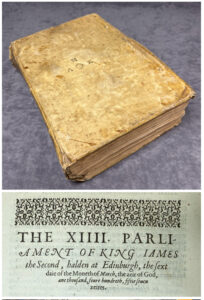
These Acts were the first mention of golf in the written word. Initially, the Acts were handwritten but in later years, the Acts of Parliaments were printed in books, the first edition known as the “Black Acts of 1566” as the printing style was very bold. Shown below is the second edition, printed in 1597.