By Frank Cantrel Jr.
The popularity of “Scotland’s gift,” the game of golf, exploded nationwide in the 1890s.
In 1895 there were 76 golf clubs in existence in the United States and by 1900 that number had grown to 982. Washington, D.C., area players eagerly participated in that golf boom.
The first courses in the D.C. metropolitan area were located in its suburbs. The Washington Golf & Country Club opened for play in 1894 in Rosslyn, Va. The Chevy Chase Club in Maryland was established in 1892 as a hunt club with golf being introduced in 1895.
In 1898, the first golf club was founded within the District: the Columbia Golf Club. It was formed by a group of 10 merchants, doctors, lawyers, and engineers. It was planned on a modest scale and had an initiation fee of $2.
The club’s first location was along Brightwood Avenue in the northwest quadrant of our nation’s capital. Initially, the club was home to a primitive clubhouse and golf course. A few months later, the club moved a few blocks north where a 2,356-yard, nine-hole course was laid out in a cow pasture.
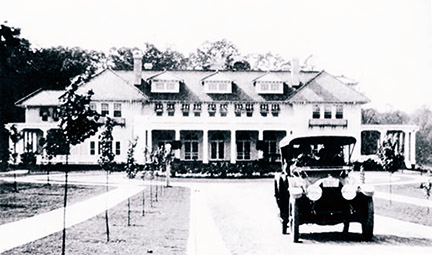
In 1900, the year it became a USGA member, Columbia Golf Club moved to its third location, still further north along Brightwood Avenue (which was renamed Georgia Avenue in 1914), leasing a property known as the Marshall Brown Estate. Here, the club constructed an 18-hole course that stretched to 5,129 yards. The existing residence was converted to a clubhouse with lockers filling the former bedrooms. The club’s roster now included 600 members.
Columbia Country Club
When planned development forced the club to vacate the property at the end of 1908, the leadership disbanded the Columbia Golf Club. Some 200 members reconstituted a new club – Columbia Country Club – which formally opened its new doors on the present Connecticut Avenue site in Chevy Chase, Md., on Jan. 1, 1911. The clubhouse was designed by club member Frederick B. Pyle.
The Golf Course
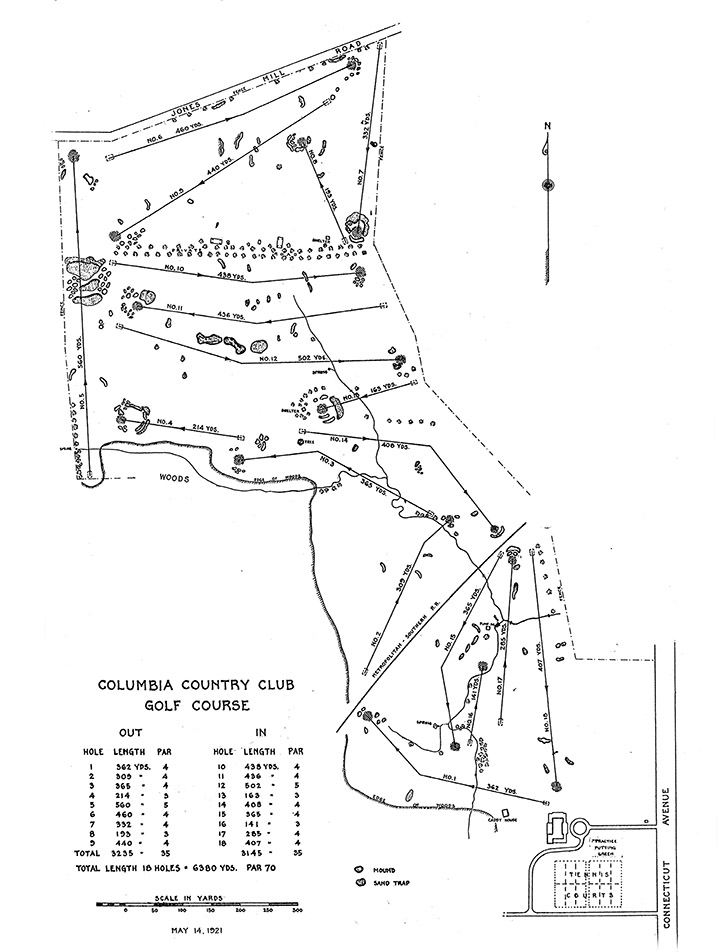
With the relocation to suburban Maryland, club leaders sought to build the finest golf course in the country. When it opened for play in 1911, the course measured 6,135 yards. Its design is generally attributed to three-time U.S. Amateur champion Walter J. Travis.
Herbert Barker and Columbia Founding Member Dr. Walter S. Harban, both close associates of Travis, are sometimes noted as the official designers. Barker was the head golf professional at Travis’ home club, Garden City Golf Club, in New York. Barker was Travis’ protégé.
Harban’s role in enhancing playing conditions both at Columbia and courses nationwide is worth a mention. A dentist by profession who included President Teddy Roosevelt among his patients, Harban was a serious student of agronomy and had been working on improving Columbia’s turf since 1906. After encountering some problems that he couldn’t resolve, in 1910 he met with two turfgrass experts at the U.S. Department of Agriculture, Drs. C. V. Piper and R. A. Oakley. It is believed to be the first time that agricultural science was sought to assist with golf course construction or maintenance. The two scientists published their seminal work, Turf for Golf Courses, in 1917. Several of its reference photographs were taken of work being conducted on Columbia’s course.
Harban’s pioneering role was instrumental in ultimately persuading the USGA to establish its Green Section in November 1920. When the USGA created a Green Committee to oversee the Section’s operations, Harban was one of five members to serve on its Executive Committee. The first meeting of the Green Committee was hosted by Harban at Columbia in January 1921.
It was Harban who was the first to contact Walter Travis in 1915, after it became known that Travis “was seeking architectural work to fill the void left by his departure from championship golf,” according to Bob Labbance in his Travis biography, The Old Man. Travis, who was a regular guest and competitor at Columbia, persuaded the club’s members that the course didn’t quite meet their objective of being the best in the country and it embarked upon a number of his proposed changes. As Labbance notes, “the work was not major surgery.” According to Washington Evening Star reports in November of that year, the changes modified a few tees and greens, added 53 new bunkers and mounds, and increased the course’s length by about 250 yards.
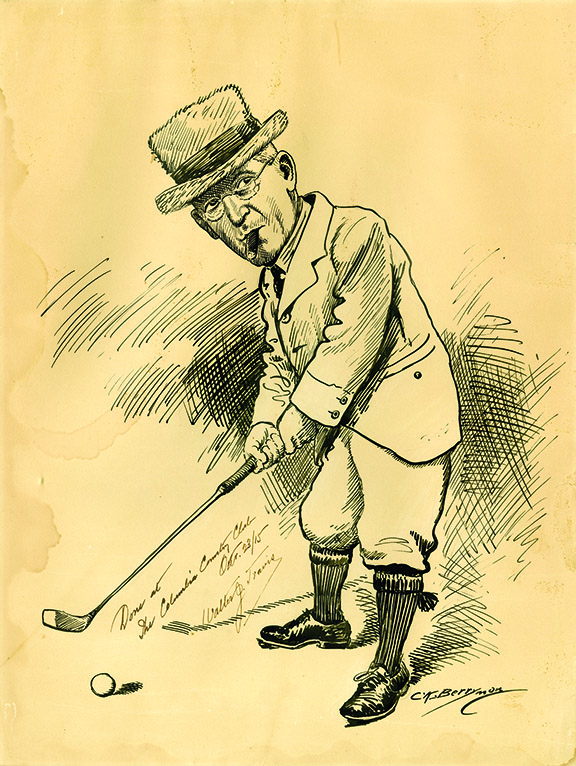
Travis was highly qualified for the job. As one of the world’s top amateur golfers, he traveled extensively in the U.S. and Great Britain to compete and to study its greatest venues for championship golf. He was particularly struck by the undulating terrain of linksland, the lack of trees, the abundance of strategically sited bunkers, and greens defined by natural contours. As the owner and publisher of The American Golfer from 1908 to 1920, Travis wrote frequently on course design. His finest works came to feature extensive (and sometimes radical) fairway bunkers, even deeper greenside bunkers, and boldly contoured greens.
Travis’ work, done in collaboration with Harban, helped persuade the USGA to award Columbia the U.S Open in 1921. It wouldn’t be going too far to say that Travis might be regarded as the first “U.S. Open Doctor” to help prepare a golf course for our National Championship.
The revised Columbia layout drew acclaim from the best players in the world. Grantland Rice, the dean of American sports writers at that time, in a New York Tribune column of Nov. 7, 1920, wrote that Harry Vardon and Ted Ray, at the conclusion of their historic 1920 exhibition tour of the States, had high praise for Columbia’s golf course: “They left offering great praise for a number of courses with an excessive admiration for the Columbia Country Club of Washington, D.C. Both Vardon and Ray were of the opinion that, considering all details, this battlefield was the best they had ever tackled.”
Host to National Championships
The Club has hosted three national golf championships: the 1921 United States Open, the 2003 United States Junior Amateur, and the 2021 United States Girls’ Junior. Jim Barnes won the 1921 U.S. Open, Brian Harman won the 2003 U.S. Junior Amateur, and Rose Zhang won the 2021 U.S. Girls’ Junior. Rose set the competitive course record, 62, during the Girls’ Junior.
The USGA has awarded Columbia two future national championships: the 2027 U.S. Senior Women’s Amateur and the 2035 U.S. Senior Amateur.
The 1921 U.S. Open
Columbia is one of only 52 golf clubs to host our National Championship. Defying widely held beliefs that quality golf courses could not be found south of Philadelphia, Columbia staged an exemplary championship won by Jim Barnes. Winner of the 1916 and 1919 PGA Championships, he claimed his only U.S. Open title at Columbia in 1921.
Known as “Long Jim” because of his height (6-feet, 4-inches) and long hitting, Barnes was one of the best players in the world during the first quarter of the 20th Century. On the U.S. tour, he is credited with 21 career victories, among them four major championships. In addition to his U.S. Open victory at Columbia, he won the first two PGA championships and the 1925 Open Championship. He is one of only eight golfers to have won those three titles. He also won the Western Open three times, which, in his day, was considered a major championship. Barnes was inducted into the World Golf Hall of Fame in 1989.
At Columbia, Barnes finished nine strokes ahead of Walter Hagen, the 1914 and 1919 U.S. Open champion, and Fred McLeod, the host professional who had captured the U.S. Open title in 1908. His nine-shot margin was the largest in the 20th Century. Chick Evans, the 1916 U.S. Open champion, edged Bobby Jones by a single stroke for low amateur honors.
One of the hallmark features of Columbia’s course then was the infamous cross bunkers at the par-5 fifth hole. At 580 yards, it was considered quite long in 1921. But its most prominent feature was an expanse of bunkers that spanned the fairway and required a carry of 150 yards to surmount them. The fifth was initially known as the “Harding hole” because President Warren G. Harding was the first to play it after it opened for play. At the 1921 U.S. Open it became known as “The Wrecking Hole.” Bobby Jones was one of its victims. In the final round, after a strong start, Jones hit a fine drive and opted to try for the green in two. He pulled two shots left and out-of-bounds. The nine that he carded there ended any chance he had to put himself into contention.
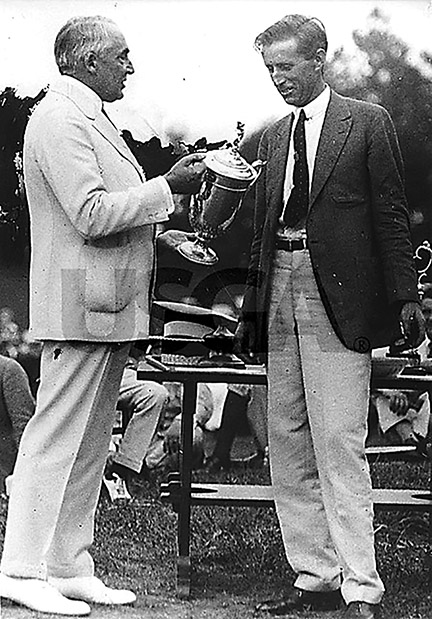
President Harding, a frequent playing partner of Travis and Barnes, was on hand to present the trophy and gold medal to the new champion. The 1921 U.S. Open at Columbia remains the only time that the sitting president has awarded the U.S. Open trophy to its champion.
Legendary Club Professionals
Columbia has been blessed by an extraordinary cadre of golf professionals and its membership has enjoyed a truly remarkable relationship with them. Starting in 1912, three professionals served the club for a combined 110 years – Fred McLeod, Bill Strausbaugh, and Bob Dolan. No other club in America can lay the same claim. Even more remarkable, all three have been inducted into the PGA of America’s Hall of Fame.
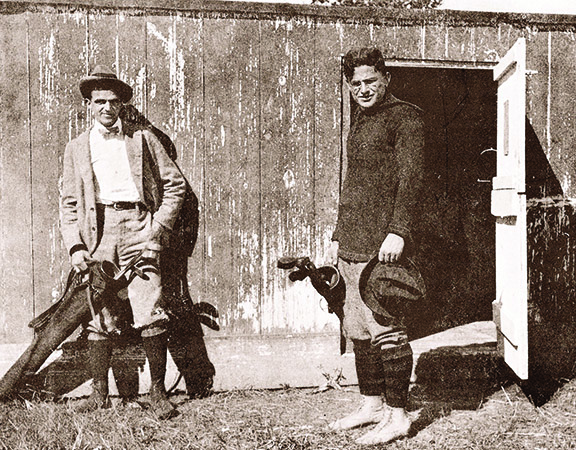
Fred McLeod moved into the pro shop at Columbia in 1912 and stayed for 55 years. Born in North Berwick, Scotland, in 1882, McLeod emigrated to America in 1903. He was slight in stature – he stood just 5 foot 4 and weighed 108 pounds when he won the 1908 U.S. Open at Myopia Hunt Club in a playoff. He was a highly competitive golfer renowned for his short game. Called “The Wasp” by his peers, McLeod had eight top-10 U.S. Open finishes. In 1919, he finished runner-up to Jim Barnes in the PGA Championship. With friend and fellow Scottish immigrant, Jock Hutchison, McLeod served as the honorary starter at the Masters from 1963 to 1976. McLeod was inducted into the PGA Hall of Fame in 1960.
Bill Strausbaugh, known respectfully and affectionately as “Coach,” spent a lifetime serving the game of golf. The World War II Marine Corps veteran was Columbia’s head golf professional for 27 years, from 1968 to 1995. Regarded by his peers as the “pro’s pro” and the “teacher’s teacher,” Strausbaugh was named PGA Golf Professional of the Year in 1966 and PGA Teacher of the Year in 1992. In 1983, he received the PGA’s Horton Smith Award for outstanding contributions to professional education, becoming the only professional to receive all three of the PGA’s most distinguished honors. “Coach” was inducted into the PGA Hall of Fame in 2005.
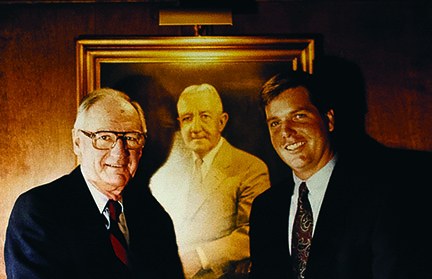
Bob Dolan Jr. succeeded Strausbaugh as Columbia’s head golf professional in 1995 and remained in the role for 28 years. The recipient of several prestigious awards for junior player development, Dolan was responsible for accelerating the growth of Columbia’s youth programs. His Middle Atlantic Section accomplishments include the 1996 President’s Award, 1997 PGA Professional of the Year, 1998 Junior Golf Leader, 1999 and 2010 Bill Strausbaugh Award, 2004 Professional Development Award and 2011 Merchandiser of the Year (Private). National PGA awards include the 2000 Youth Player Development Award and the 2011 Bill Strausbaugh Award. He is one of the very few PGA professionals to win two or more national awards. In 2023, Dolan was inducted into the PGA of America’s Hall of Fame.
Columbia Today
Now more than 125 years old, Columbia Country Club offers a classic example of Golden Age architecture. It remains one of the truly venerable clubs in the United States. A very family-oriented club that is renowned for its “warm Columbia welcome,” it offers a full range of athletic, social and recreational facilities, including tennis courts, pools, a fitness center, a bowling center and more.
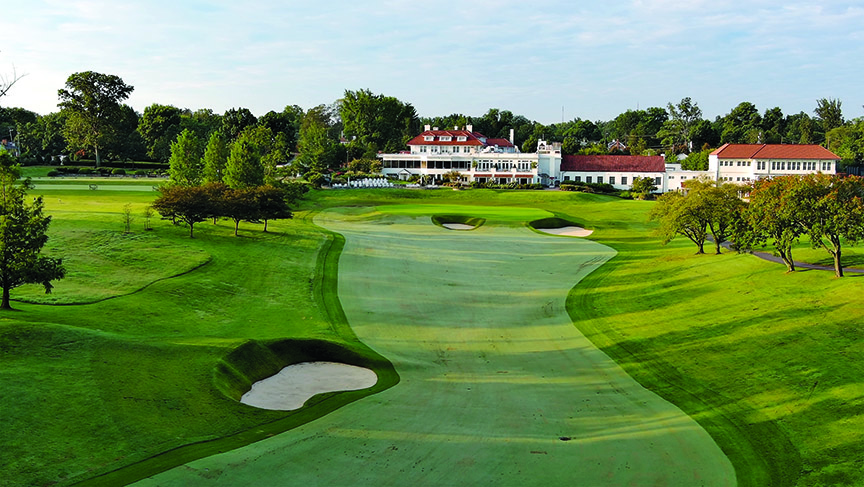
The game of golf will always remain at its core. The par-70 golf course has evolved but the original routing remains intact. Over the years, additional acres were added and its bunkers and hazards have been adjusted, most recently in a 2023 renovation done “in the spirit of Travis.” Travis’ influence is also seen in the approaches to several undulating and segmented greens. An article written by Rick Woelfel (“Turf Intrigue Near the Capitol”) for Golf Course Industry reviewed the 2023 renovation work and offered this assessment: “In Greek mythology, the Elysian Fields or Elysium is a paradise, a final resting place for the souls of heroes. If Elysium were a golf course, it might well resemble Columbia Country Club.”
It is not long by contemporary standards – from the championship tees it measures 6,884 yards. But the topography of its rolling hills, its well-placed bunkers, and its lightning-quick greens offer a strong defense of par. Visiting players also discover that the only level lie they can expect to find is on one of its tee boxes.
The golfing experience at Columbia is enhanced by many traditions it has long embraced; two stand out. While most golf clubs have moved away from caddies in favor of carts, Columbia has remained true to its caddie program. Caddies are a rich part of Columbia golf for both members and guests alike.
Another cherished tradition at Columbia is the Matchmaker. A “benevolent dictator” of the first tee, Columbia’s Matchmaker is a welcoming ambassador and the organizer of virtually every match before the first ball takes flight. Renowned golf writer Tom Coyne, after a visit to the club, posted on Facebook that the “[c]oolest thing about Columbia is [its matchmaker]…who is charged with making up the daily matches for the members. He sets the foursomes, the sides, assigns the strokes (with adjustment where he deems appropriate) and dots the cards. You get your card on the tee and there’s the match you’re playing. In this day and age of set foursomes and singles who can never get a game, this is a tradition I wish for every golf club.”
In addition to hosting national championships, Columbia is a frequent host to many state and regional professional and amateur championships. Its challenging course has produced members who are highly competitive and successful at every level of the game. Columbia members have won dozens of titles in men’s and women’s competitions, and the club has won the most statewide team championships in Maryland history (12). Columbia’s members have played in nearly every USGA championship, the Masters, and the Walker Cup. The individual achievements of many of its members are a great source of pride and celebration at the club.
In the end, however, the essence of the club is defined less by those accomplishments, its golf course or its facilities, and more by the tradition, excellence and camaraderie of the membership that has become known as the Spirit of Columbia.