
Before the Oaks, There Was Brackenridge
As the PGA TOUR returns to San Antonio this week for the Valero Texas Open, it feels like the right time to look backward instead of forward. The modern tournament now lives at TPC San Antonio, but the soul of this event was built long before that. The Texas Open was first played in 1922; it remains one of the oldest tournaments on the PGA TOUR schedule, and it is the oldest professional golf tournament to have stayed in the same city for its entire run. That kind of continuity matters. In a sport that loves its traditions, San Antonio has one of the strongest claims anywhere.
Where the Texas Open Found Its Footing
The story really starts at Brackenridge Park. Bob MacDonald won the inaugural Texas Open there in 1922 by a shot over Cyril Walker, giving San Antonio a tournament with real ambition from day one. A year later, Walter Hagen came from six shots back, caught Bill Mehlhorn and won in a playoff. That was more than a nice early finish. Tournament records note that Hagen’s victory drew national attention and helped establish the Texas Open as an event worth following well beyond Texas. In many ways, that was the week the tournament truly announced itself.
Brackenridge was not just the site of a first chapter. It was the backbone of the tournament’s early life. The Valero Texas Open media guide shows that Brackenridge Park Golf Course hosted 21 editions of the event across several stretches, more than any San Antonio venue before the move to the modern era. That kind of repeated use says something important. Tournament golf kept coming back there because Brackenridge fit the identity of San Antonio golf. It was familiar, dependable and capable of producing moments people remembered.
When Hogan and Nelson Turned It Personal
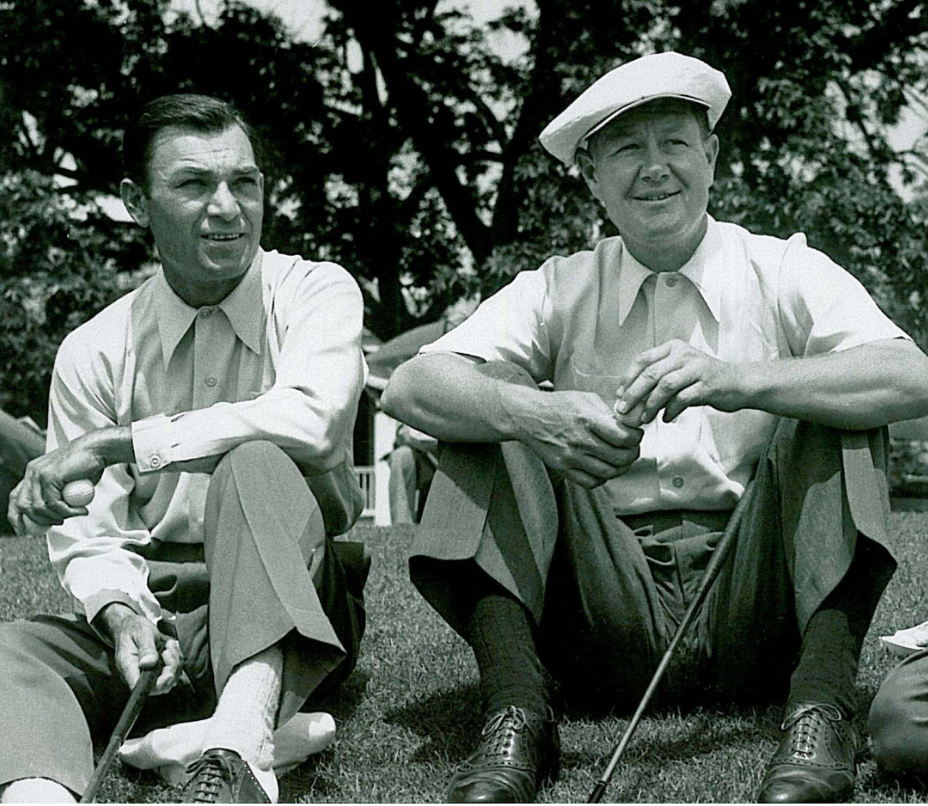
If you want one thread that ties San Antonio golf history to Texas golf history, it is the relationship between Ben Hogan and Byron Nelson. The Texas Open is stitched with their names. Hogan played the Texas Open in 1930 as his first professional tournament at age 17. He missed the cut and went back home to Fort Worth. That is the sort of detail history loves because it reminds us that legends do not arrive as legends. They arrive unsure, unproven and often a little humbled.
A decade later, Brackenridge became the stage for one of the great Texas duels. In 1940, Byron Nelson beat Hogan in an 18-hole playoff at Brackenridge Park. Then came more near misses for Hogan. The tournament’s historical notes show that Hogan finished second three straight times from 1940 through 1942 before finally breaking through. In 1946, he came back to Brackenridge and won the Texas Open, his only title in San Antonio. That feels fitting. The city that gave him one of his first hard lessons also gave him his local redemption.
Records, Near Misses and a Farewell
Brackenridge was also where the tournament produced some of its most memorable scoring feats. In 1939, Jug McSpaden stole headlines with a practice-round 59 at Brackenridge while playing with Nelson, Sam Snead and Paul Runyan. In 1951, Al Brosch tied the old PGA TOUR 18-hole scoring record with a 60 there. Then in 1955, Mike Souchak won at Brackenridge with a 257 total, a PGA TOUR 72-hole scoring record that stood for nearly 50 years. Those are not side notes. Those are the kind of numbers that keep a course in the conversation long after championships move on.
And Brackenridge got a proper closing note. In 1959, San Antonio’s own Wes Ellis won the final Texas Open played there. That feels right, too. A course that helped build the event got to hand it off with a hometown champion holding the trophy. After that, the tournament moved through other San Antonio stops, from Fort Sam Houston and Oak Hills to La Cantera and eventually TPC San Antonio. But Brackenridge never lost its place in the tournament’s memory.
Why It Still Matters This Week
That is what makes Brackenridge worth remembering now. The Valero Texas Open in 2026 will be played on a different course, under a different setup and in a very different era. But when the TOUR comes back to San Antonio, it is still walking inside a tradition that Brackenridge helped shape. Before there were corporate chalets, television windows and modern agronomy teams, there was a tournament trying to matter and a city willing to keep showing up for it.
For a Golf Heritage Society audience, that is the real point. Golf history is not only about who won. It is about where a tournament found its character. In San Antonio, that place was Brackenridge Park. And even now, more than a century after the first Texas Open, you can still feel its fingerprints on the week.