10 Little-Known Facts About Arnold Palmer That Reveal the Man Behind “The King”
Arnold Palmer’s legend usually gets told the same way: seven majors, that go-for-broke style, the roars on Sunday and a fanbase so devoted it became its own brand. But the real story of how Palmer became “The King” is actually more interesting when you look past the highlight reel and into the quieter moments, the detours, the small decisions, the instincts that didn’t just make him a champion but turned him into the force that reshaped modern golf.
Here are 10 facts about Arnold Palmer that most fans have never heard, each one revealing something essential about the man who changed the game forever.
His First “Course” Was a DIY Pitch-and-Putt Between Runways
Long before Palmer owned Bay Hill or designed courses around the world, he did something that sounds almost too good to be true but comes straight from his own telling. While training with the U.S. Coast Guard at Cape May, New Jersey, Palmer designed and built an improvised nine-hole pitch-and-putt course, nearly single-handedly, on base land between two runways.
It wasn’t glamorous. It wasn’t regulation. But it was pure Palmer: find a way, build a way, play a way. Even in the military, even without resources, he couldn’t help but create a place to play the game he loved.
Tragedy at Wake Forest Changed Everything
Most fans know Palmer went to Wake Forest on a golf scholarship, but fewer know how sharply his life turned during those years. His close friend, roommate and teammate Bud Worsham died in an auto accident and Palmer left school in grief. That loss led directly to his decision to enlist in the Coast Guard. He reported for duty in January 1951 and served for three years, from 1951 to 1954.
What’s remarkable is that Palmer didn’t walk away from golf during that time. Instead, he leaned into it as something stable when everything else felt shaken. Golf became his constant, his anchor, the thing that made sense when the world didn’t.
The Win That Made His Pro Career Wasn’t Even a Tour Event
Palmer’s 1954 U.S. Amateur victory at the Country Club of Detroit is easy to overlook today, especially compared to his Masters wins and major championships. But Palmer himself never underrated it. He beat Robert Sweeny, 1 up, in the 36-hole final and later called it the “turning point” of his career because it gave him the confidence to turn professional that fall.
It’s a reminder that “The King” wasn’t crowned by hype or marketing. He earned his belief the old-fashioned way, with a defining amateur title that proved to himself, and everyone watching, that he belonged.
“Arnie’s Army” Started With Actual Soldiers
The nickname “Arnie’s Army” sounds like pure sports poetry, the kind of organic fan movement that just happens. But the origin story is more literal than most people realize.
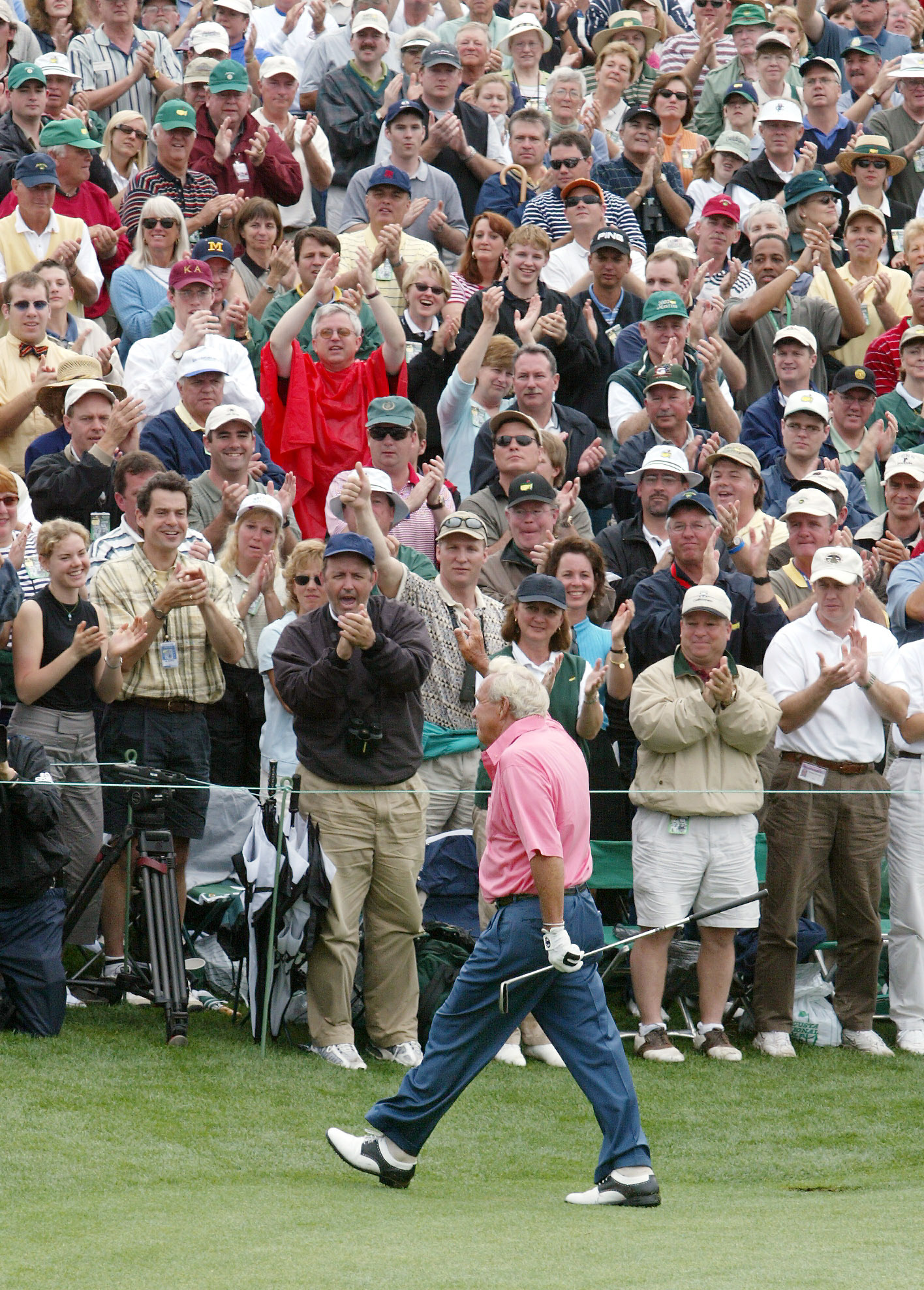
At the 1959 Masters, soldiers from nearby Fort Gordon (then Camp Gordon) were brought in to operate scoreboards and free tickets were offered to soldiers who showed up in uniform. Palmer looked up during the tournament and saw the phrase “Arnie’s Army” being used to describe his growing following. The name stuck and what started as a group of actual military personnel evolved into golf’s first truly modern fanbase.

A Handshake in 1960 Helped Launch Modern Sports Business
In 1960, Arnold Palmer became the first star client of Mark McCormack, the pioneering agent who would go on to build IMG into a sports marketing powerhouse. The relationship is often described as beginning with a handshake and that origin story matters because it marks a genuine turning point in how athletes, endorsements and media could work together.
Palmer didn’t just benefit from the rise of sports marketing. He helped invent its center of gravity. He was the proof of concept that an athlete’s value extended far beyond tournament winnings, that personality and charisma could be monetized in ways the sports world had never fully explored.
Bay Hill Wasn’t a Trophy Purchase
Bay Hill is so synonymous with Palmer now that it’s hard to imagine one without the other. But the path to ownership was surprisingly methodical and patient.
After playing there in a 1968 exhibition match against Jack Nicklaus, Palmer fell in love with the place. He leased the course in 1970 with an option to buy, then exercised that option five years later in 1975. Only after that did Bay Hill begin its transformation into the home base that would eventually host a PGA Tour event starting in 1979, what we now know as the Arnold Palmer Invitational.
It wasn’t an impulse buy or a vanity project. It was a long courtship that turned into a lasting commitment.
His Course Design Legacy Was a Serious Global Operation
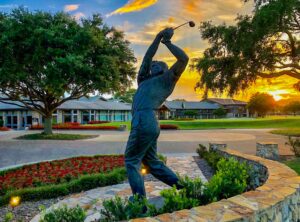
Palmer didn’t just “put his name” on golf courses the way some celebrities do. He worked closely with golf architect Ed Seay starting in the early 1970s and the relationship eventually became a formal design company, often dated to 1979 as Palmer Course Design.
The result was a lasting architectural footprint: hundreds of courses across the globe, on multiple continents. Palmer’s influence wasn’t only about televised drama and Sunday charges. It’s literally built into fairways and greens that golfers play today, a physical legacy that will outlast any trophy case.
He Wasn’t Just a Jet-Setter, He Was the Pilot
Plenty of stars in Palmer’s era traveled by private aircraft. Far fewer flew themselves. Palmer became one of the first athletes to pilot his own plane to tournaments and over a lifetime he logged nearly 20,000 hours in the cockpit.
His final flight as pilot came on January 31, 2011, flying from Palm Springs to Orlando in a Cessna Citation X. It was the same day his pilot certification expired. He chose not to renew, ending a flying career that had been as much a part of his identity as his golf swing.
His Hometown Airport Tells His Aviation Story
In 1999, Latrobe, Pennsylvania honored Palmer by renaming the local airfield Arnold Palmer Regional Airport. What makes it more than ceremonial is the backstory.
According to the airport, Palmer grew up within a mile of the runway, witnessed the world’s first official airmail pickup there in 1939 and later learned to fly at that same field. The “golf icon who loved aviation” isn’t just a marketing slogan. It’s a hometown through-line, a story that started in childhood and never really ended.
The Famous Drink Got Famous Because Someone Else Ordered It
The iced tea and lemonade combo was something Palmer routinely requested for himself, but the naming moment is the part most fans miss. One popular account traces the drink’s rise to a woman overhearing Palmer order it in the 1960s and asking the waitress for “that Palmer drink.”
The name stuck. Eventually Palmer leaned into it as part of his wider cultural footprint, proof that his charisma didn’t stop at the ropes. He became one of the few athletes whose influence extended into everyday life, into something as simple and universal as what you order at a snack bar.
The Real Takeaway
Arnold Palmer’s greatness wasn’t only that he won. It’s that he built things: a following, a business model, a tournament home, a design legacy, even a little piece of pop culture you can still order today.
The little-known facts don’t shrink the legend. They explain it. They show us that Palmer’s impact came from more than talent or timing. It came from instinct, from generosity, from an ability to see possibilities where others saw limitations. He built a pitch-and-putt course between runways because he needed to play. He turned grief into service and service back into golf. He shook hands with an agent and changed how athletes do business. He fell in love with a course and made it his home.
That’s the real story of “The King.” Not just what he won, but what he built and how much of it is still standing.
PGA of America Golf Professional Brendon Elliott is an award-winning coach and accomplished golf writer whose work has captivated readers across multiple platforms. His insightful column “The Starter” can be found on R.org, while his compelling stories grace the pages of Athlon Sports. To keep up with his latest insights and analysis, subscribe to his newsletter or explore his full portfolio on MuckRack. Elliott now brings his expertise and passion for the game to the Golf Heritage Society as our new lead writer.
Us Open