
This Day in Golf History: March 28 and the Quiet Day That Helped Shape the Game
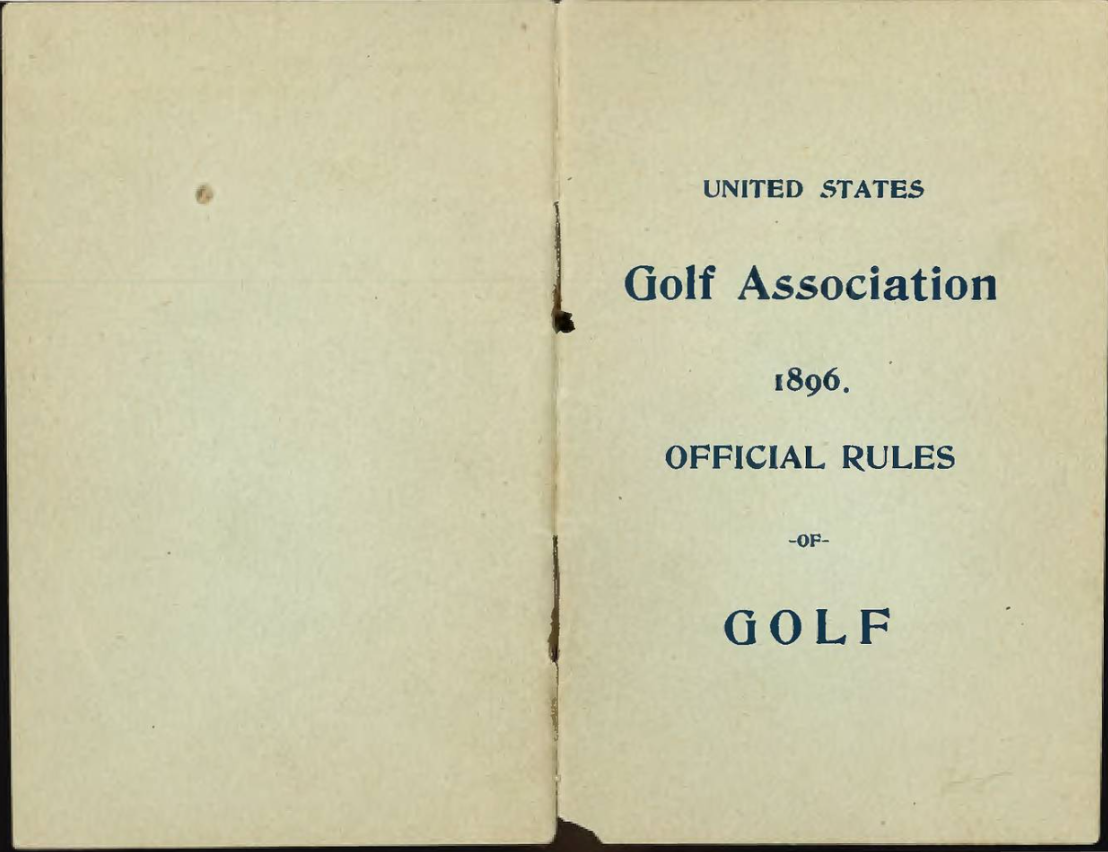
After the USGA adopted the Royal & Ancient’s 1891 code of rules on March 28, 1895, a Rules of Golf book was introduced in 1896. Photo: USGA
You know what? March 28 deserves a little more respect than it gets.
It is not a date most golf fans circle on the calendar. There is no single major championship finish attached to it, no one towering moment that immediately leaps to mind. But the deeper you dig, the more March 28 starts to feel like one of those wonderfully sneaky dates in golf history, the kind that tells you the game was built as much by structure, stewardship and staying power as it was by dramatic final rounds.
Take 1895.
On March 28 of that year, the USGA Executive Committee adopted the Royal & Ancient’s 1891 code of rules, a step that helped give American golf something it badly needed as it grew: order. That may not sound glamorous. No one ever framed a photograph of a rules meeting. But this mattered. A young game in a young golf nation needed consistency if it was going to become something larger than a scattered collection of clubs playing similar versions of the same sport. The USGA credits Charles Blair Macdonald as a key force in helping make that happen.
And if that were not enough for one date, March 28, 1895, also marks the presentation of the trophy that would become the Havemeyer Trophy, awarded to the winner of the U.S. Amateur. For golf history lovers, this is exactly the kind of detail that hits home. Trophies are not just shiny objects. At their best, they become storytellers. The Havemeyer would go on to become one of the great symbols of amateur golf in America, first awarded later that year to Macdonald after the inaugural U.S. Amateur. Its original form was lost in the East Lake fire of 1925, but by then its place in golf memory was already secure.
So yes, March 28, 1895, was a pretty good day’s work for American golf. It helped define how the game would be played, and it helped establish one of the objects players would dream about winning.
That alone would be enough to give the date a little historical weight.
But March 28 was not finished.
In 1888, Jack Burke Sr. was born, and if that name does not immediately ring as loudly today as it should, it is worth fixing that. Burke was much more than a fine player, though he certainly was that too. He tied for second in the 1920 U.S. Open and later won the 1941 PGA Seniors’ Championship. But his real legacy runs deeper than his own resume. According to the Texas Golf Hall of Fame, Burke taught or influenced Jimmy Demaret, Babe Zaharias, Jack Grout and his son, Jack Burke Jr. Even Ben Hogan credited Burke Sr. with helping shape his downswing. That is a serious golf footprint right there.
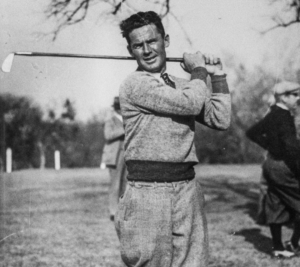
Photo: Texas Golf Hall of Fame
He also invented the all-weather grip, which tells you something about the kind of golf mind he was. Some figures in golf history are remembered for a trophy shelf. Others are remembered because their ideas and instruction kept echoing through generations. Burke belongs in that second group, and those people often shape the game in ways that last even longer.
Fast forward to March 28, 1999, and the date delivers a very different kind of milestone. That was the day David Duval reached world No. 1. The Official World Golf Ranking archive confirms he moved to the top on March 28 and held that position into late June, with one more return later that summer.
That one deserves to be remembered a little more vividly than it often is.
Duval’s run at the top can get blurred because it lived in the same broad era as Tiger Woods, and Tiger has a way of making everyone else’s accomplishments look smaller in hindsight. But for a stretch there, Duval was not just elite. He was the standard. He was the player everyone else was chasing. That matters. World No. 1 is not a sentimental title. You do not stumble into it. You earn it by being better than everybody else over time, and on March 28, 1999, Duval had done exactly that.

David Duval in action during the Memorial Tournament at Muirfield Village Golf Club. June 2, 1999; Dublin, OH; Credit: Matthew Emmons-Imagn Images
So maybe that is the real charm of March 28.
It is not a date built around one giant headline. It is better than that. It is a date that reminds us that golf history is made in all sorts of ways. Sometimes it comes through rules and governance. Sometimes it comes through silver and symbolism. Sometimes it arrives with the birth of a teacher or the rise of a world No. 1.
March 28 may not shout.
But if you listen closely, it has plenty to say.