
The Houston Open: A Tournament That Grew Up With Houston
Some tournaments feel frozen in time. Their history is tied to one course, one identity, one familiar rhythm. The Houston Open has never really been that kind of event.
Its story is broader than a single clubhouse or stretch of fairway. It is a story of a city, a region and a game growing together. The Houston Open has moved, evolved, paused, restarted and reinvented itself over the decades, yet it has always remained distinctly Texan and unmistakably Houston. That is part of what makes its history so compelling. The tournament has endured not because it stayed the same, but because it kept finding new ways to matter.
As the Texas Children’s Houston Open returns once again to Memorial Park Golf Course, it feels like the right time to look back at one of the PGA Tour’s most layered and resilient events.
Before the Houston Open became the Houston Open
Long before the modern tournament took hold, Houston already had a place on the professional golf map.
An earlier version of the Houston Open was played off and on between 1922 and 1938. It was not yet the fully formed annual stop we think of today. Instead, it appeared in scattered installments, reflective of a sport and a city still shaping their relationship with one another.
That first run began in 1922, when George Bowden and Peter O’Hara shared top honors. Joe Kirkwood Sr. won in both 1923 and 1924. Later winners included Al Espinosa in 1930, Clarence Clark in 1932, Harry Cooper in 1937 and Jug McSpaden in 1938. Those names help root the event in the game’s early professional era, and they remind us that Houston’s golf history was already taking shape well before the postwar boom transformed the sport.
The final two tournaments of that early stretch were played at River Oaks Country Club, a venue that would become important again when the event returned in a more lasting form.
The postwar beginning that stuck
The modern Houston Open was established in 1946, and that is the version of the event recognized today. Its first edition also took place at River Oaks, creating a meaningful link between Houston’s earlier golf history and its future as a regular tour stop.
The winner of that first modern Houston Open was Byron Nelson. Ben Hogan finished second.
That alone tells you something about the stature of the moment. Two Texas giants stood at the top of the leaderboard as Houston launched what would become one of the Tour’s enduring events. It was a beginning worthy of the city and of the game.
The tournament did not settle immediately into one home. It moved to Memorial Park in 1947, skipped 1948, then shifted to Pine Forest in 1949 and BraeBurn in 1950. From 1951 through 1963, though, it found some stability at Memorial Park. Even then, the Houston Open was showing one of the traits that would define it for decades. It belonged to Houston first, and to any individual club second.
A tournament with many addresses
The Houston Open has one of the more interesting venue histories in professional golf because it mirrors the growth of the city itself.
After its long stretch at Memorial Park, the event moved to Sharpstown in 1964 and 1965, then to Champions Golf Club beginning in 1966. In 1972, it was played at Westwood Country Club. From there it moved to Quail Valley in Missouri City in 1973 and 1974, then to The Woodlands area beginning in 1975. The tournament remained tied to that northern corridor for decades, first at The Woodlands Country Club and later at the TPC at The Woodlands through 2002.
In 2003, the event relocated again, this time to the Golf Club of Houston, where it stayed through 2019.
That is a lot of movement for one tournament, but in the case of the Houston Open, that movement is not a flaw in the story. It is the story. This was never just a tournament anchored to one parcel of land. It has always reflected the sprawl, ambition and evolution of Houston itself.
The Masters week-before role
For many modern fans, the Houston Open is remembered most vividly for its place on the schedule.
From 2007 through 2018, with 2013 as the exception, it was played the week before the Masters. That gave the tournament a unique place in the golf calendar. It became the final competitive rehearsal before Augusta National and, in some seasons, a last-chance path into the Masters field.
That role gave the Houston Open a sense of urgency that set it apart. Players came looking to sharpen their games. Fans watched for clues. The event served as both a standalone tournament and an unofficial prelude to the season’s first major.
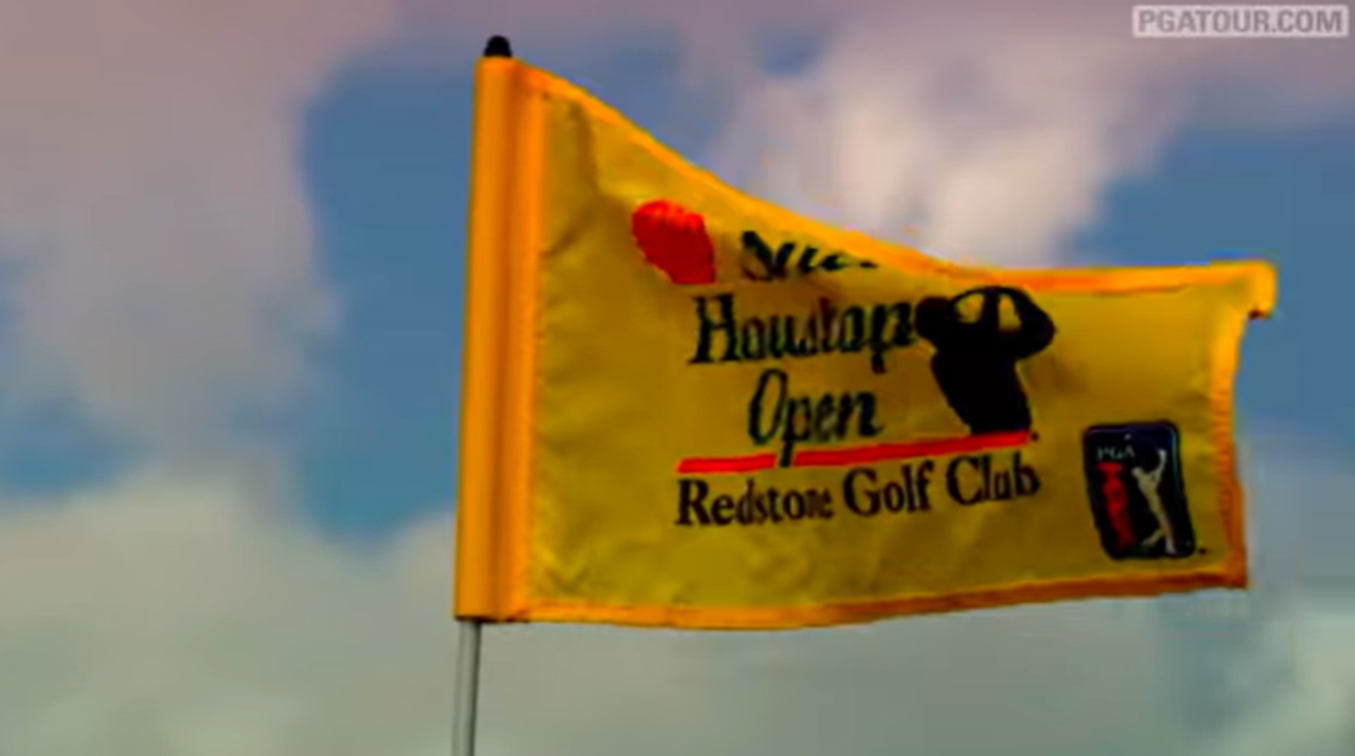
For much of that period, Shell served as title sponsor, helping give the event a long and recognizable identity. When that sponsorship came to an end after 2017, the future of the tournament briefly felt uncertain. But Houston, as it has done before, found a way to keep the event alive. The Astros Foundation and local leadership played a major role in preserving and reshaping it for a new era.
Memorial Park and the power of public golf
One of the most meaningful chapters in the tournament’s history came with its return to Memorial Park.
For the 2021 season event, which was played in November 2020 because of the pandemic-altered schedule, the Houston Open returned to Memorial Park for the first time since 1963. The move carried historical weight on its own, but it meant even more because Memorial Park is a municipal course.
That matters.
In a game often defined by exclusivity, the Houston Open came back to a public venue in the heart of the city. The Astros Foundation invested heavily in the renovation, helping transform Memorial Park into a course capable of hosting the world’s best players while still serving everyday golfers.
That return gave the tournament something powerful. It reconnected the event to its own past while also making a statement about the kind of future golf can have. Big-time tournament golf and public golf do not have to live in separate worlds.
The champions who carried it forward
Like any great event, the Houston Open can also be told through its winners.
Byron Nelson launched the modern history in 1946. Bobby Locke followed in 1947. Cary Middlecoff won twice. Jack Burke Jr. won twice. Arnold Palmer added his name to the story with victories in 1957 and 1966. In more recent decades, players such as Fred Couples, Vijay Singh and Phil Mickelson added fresh chapters to a tournament already rich in character.
Now the event belongs to another generation as well. Min Woo Lee returns as defending champion, linking the present field to a history that stretches back more than a century if one counts those early Houston tournaments.
That is part of the beauty of events like this. The names change. The courses change. The city grows and the game moves with it. But the thread remains.
Memorable Moments: Shell Houston Open
More than a tournament stop
The Houston Open is more than a date on the schedule. It is more than a list of champions and venues. It is a reflection of how golf takes root in a place and then grows with it over time.
Its history includes false starts and fresh beginnings. It includes private clubs and public fairways. It includes legends of the game and modern stars still writing their own stories. Through all of that, the Houston Open has remained something rare in professional golf: a tournament that truly feels shaped by its city.
That may be why its story still resonates.
Houston has never been small in its thinking, and neither has this event. The Houston Open has adapted, endured and kept moving forward, just like the city around it. In doing so, it has earned a history worth preserving and retelling.