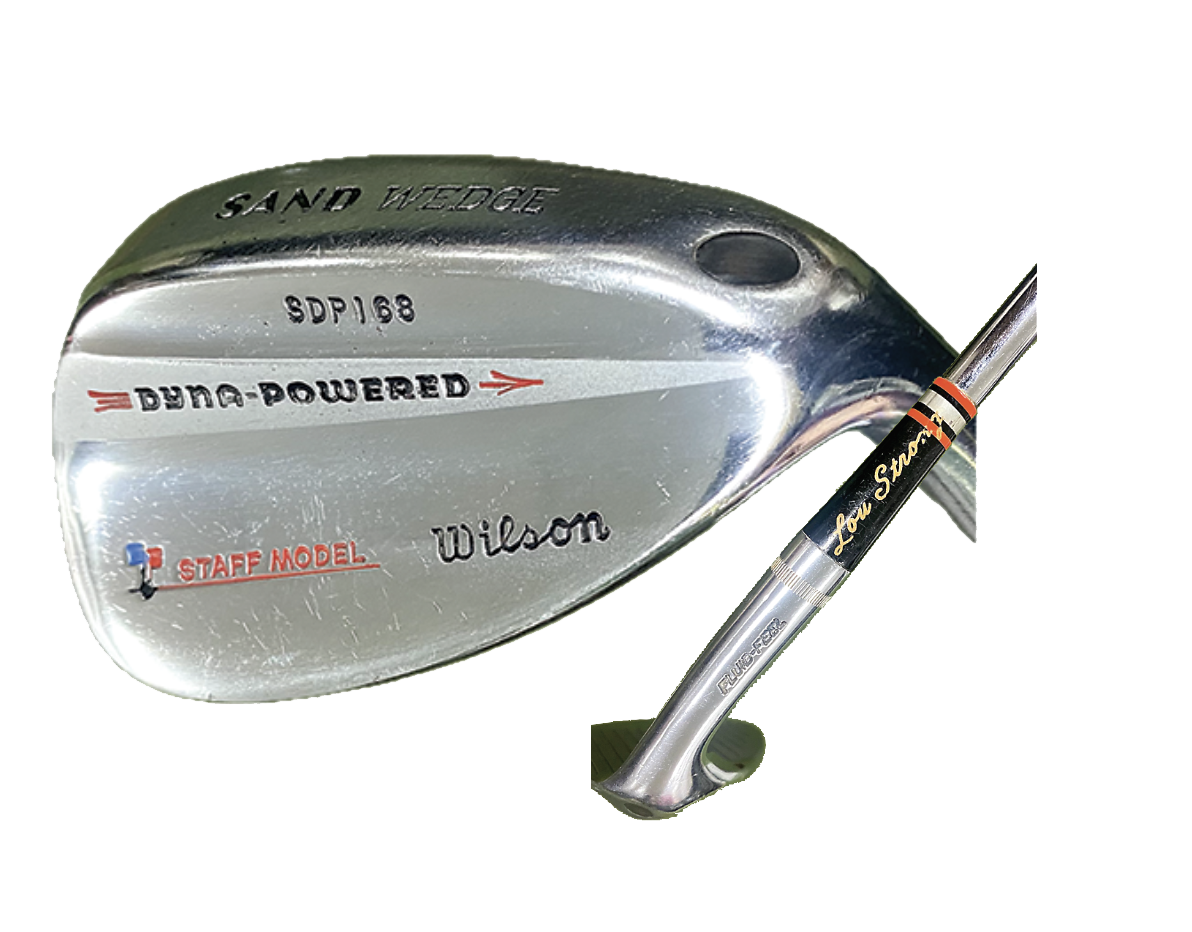
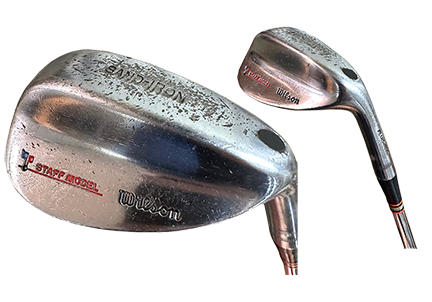
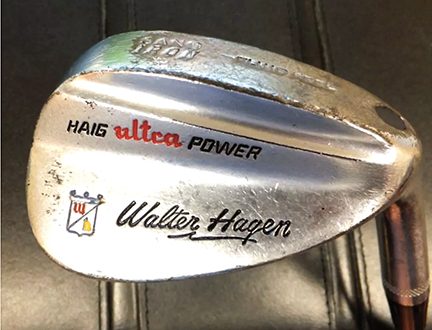
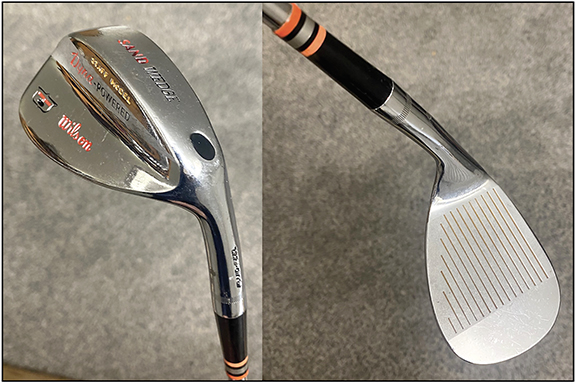
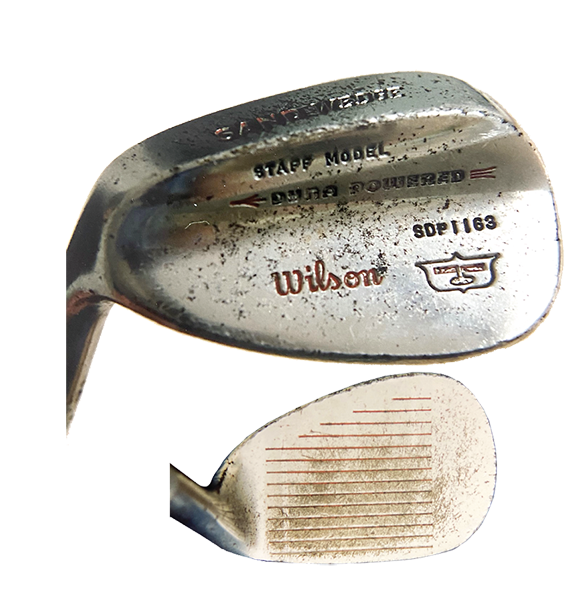
1956 wilson sand wedge. Wilson’s master grinders of sand wedges were second to none when it came to shapes and bounce, especially coming out of their custom department. Nowhere is that more evident than on the “SDP 168” on this custom ordered and custom ground 1956 Sand Wedge by Lou Strong, the head golf professional at Chicago’s Tam O’Shanter CC. This club was barely used and I was fortunate to acquire it.
Specialty clubs that are wedged into golf’s history books
By Bobby Grace
There are two parts to being a great wedge player: one is the player and one is the club. It is often said that it’s the “Indian” and not the “arrow.” I say the Indian always has to find his secret in the dirt (or sand).The arrow is also a good part of it. In this article I want to focus on a few of the greatest wedge players who ever lived and their tools of the trade.
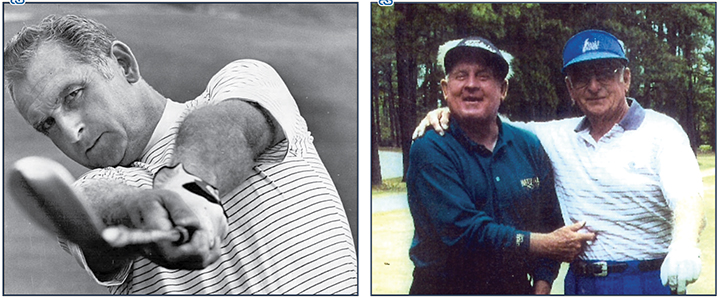
Nick Weslock, left, and with his pal Moe Norman, on the left at right. The two played together for enjoyment 4-5 days a week in their later years.
My favorite is Nick Weslock from Canada. He was so good with the wedge he was nicknamed “Nick the Wedge.” He remained an amateur all his life due to the fact that he was a successful engineer and back then there was no money in professional golf. Weslock won 400 tournaments as an amateur, played in four Masters, and was victorious in 11 Ontario Amateurs. He also won seven Ontario Opens against professionals. His record speaks of why the wedge is also known as the “Great Equalizer.”
In this article I’ll cover some of golf’s most coveted wedges by the PGA Tour players, top amateurs, and veteran collectors alike. Every great tour player that I grew up with in the 70s and 80s was playing one Wilson Staff wedge or another. The Black Button Dyna Powered and Walter Hagen Ultra Power Sand Wedges from 1955-1960 were the focus.
Some of my personal favorite tour players of the past who were absolutely stellar when the wedges got in their hands are listed below. Most were not long hitters, being men of smaller physical stature, and needed an advantage over such long-hitting tour giants as George Bayer, Paul Bondeson, or Mike Souchak. These guys weren’t just excellent with the wedge, they were masterly.
Paul Runyan won 29 tour events and eight others including the 1934 and 1938 PGA Championship and proved he was one of the best ever.At 5-feet-7-inches and 130 pounds he beat the best players in the world with his short game.
Lee Trevino was another 5-foot-7-inch underdog against those PGA Tour giants until he got the wedge in his hands. It was truly miraculous to watch. Trevino notched 92 professional victories and six majors to his credit.
Harvie Ward won back-to-back U.S. Amateurs and a British Amateur. I was fortunate to play with him at the Gasparilla Invitational amateur event at Palma Ceia in Tampa in 1988, and saw him hit the best wedge shot I have ever seen, amateur or professional. He was on hardpan dirt to the right of the bunker on 17 with the pin tucked very close to the bunker and OB over the green.I thought he had no shot at all. Ward pulled out a wedge – his first of the day – and I noticed it had all the bounce ground completely off the sole. He hit that shot straight up in the air about 40 feet high and it landed and stopped 6 inches from the cup. If I wasn’t standing right next to him I would never have believed that shot. He had a talent with the wedge that was totally unknown to me.
Phil Rogers had six professional wins and soon figured out that teaching the short game would be his style. He was a master with the sand wedge and taught many Tour players his secrets.
Gary Player, at 5-foot-6-inches, is still known as the “Best Bunker Player who ever lived.” He won over 160 professional tournaments on six continents over seven decades, including nine Majors, and was inducted into the World Golf Hall of Fame in 1974.
Seve Ballesteros is known as one of golf’s greatest scramblers of the short game. He won 90 professional tournaments and could get up and down from the ball washer.During his Ryder Cup events he was always a huge threat, helping the Europeans win five times as both player and Captain. We could have devoted this entire article to him!
Jose Maria Olazabal obviously learned well from his close friend, Seve, as his wedge game was absolutely fabulous. He won 30 professional tournaments, including two Masters, and was on seven Ryder Cup teams. Like Seve, he was always a threat.
Jack Burke Jr. is yet another 5-foot-7-inch Tour player who was marvelous with the wedge. He amassed 19 professional wins, including the Masters and a PGA title. He was on five Ryder Cup teams and is a member of the World Golf Hall of Fame.
R.H. Sikes, known as one of the great wedge experts, undoubtedly learned the finer points of this skill from Paul Runyan at Hot Springs, Ark. Sikes became one of the most knowledgeable classic club experts in the world from the 1960s-1990s.
Now, let’s see some photos of those great sand iron classics….
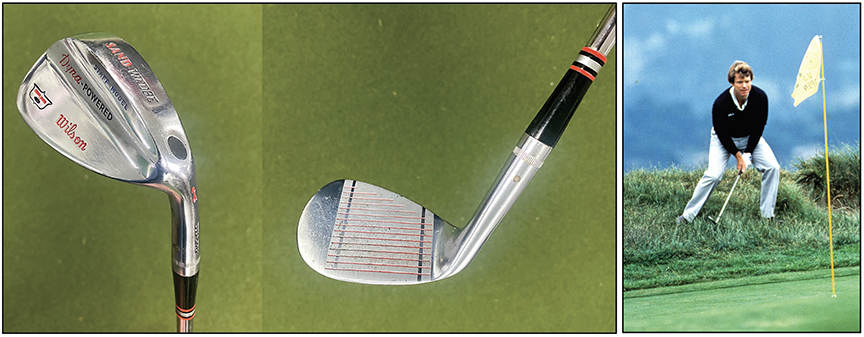
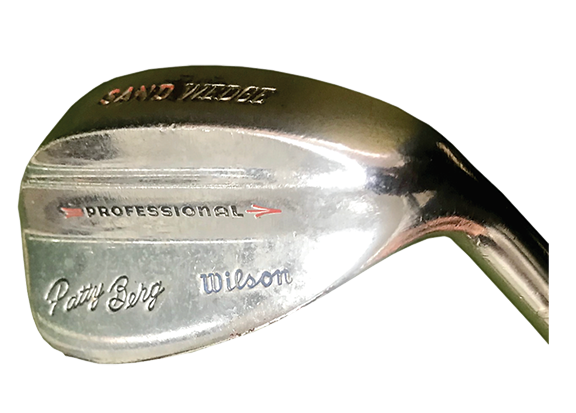
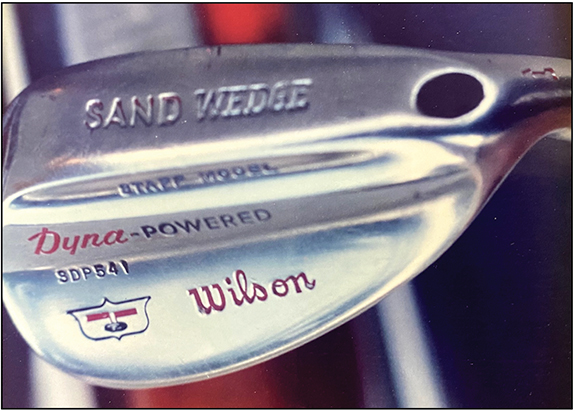
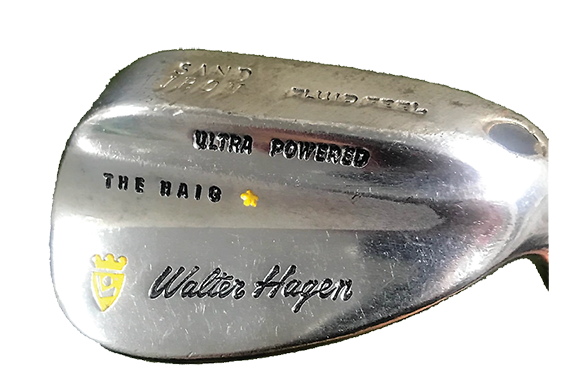
1958 Dyna Powered with fluid feel on the neck and the arrow. David Graham won 38 professional events and two Majors. He was a golf club expert to say the least. Also small of stature at 5-foot-9-inches, he was especially proficient and demanding with the sand wedge. In 1976 I met him at a tour event where he personally schooled me on what to look for when collecting wedges. The wedge above is his favorite. The same club was used by Tom Watson to hole out his chip on the 17th at Pebble Beach at the 1982 U.S. Open (shown at right).Early Wilson Staff model. This is a very early Wilson Staff, c. 1955, just prior to the Dyna Powered 1956. This looks a little like the 1955 Top Notch Staff, but this one has the “Fluid Feel” on the neck and the Black Button. A strange wedge, indeed. It seems to be one of the very first Black Button wedges.1958 Walter Hagen Ultra Power. Ben Crenshaw, at 5-foot-9-inches, won two Masters and 30 professional events. He was inducted into the World Golf Hall of Fame in 2002. As a member of the Walter Hagen staff, he likely would have played with either the 58 Staff or 58 Hagen like this one.1959 Dyna Powered sand wedge. Known as the “BOMBER,” due to its extra large flange, toe and headweight, somewhere in the “F” swingweights. This rare example was found in near new condition.Left-handed 1958 Dyna Powered sand wedge. This rare as hen’s teeth club is the only one I have ever seen or even heard about. The Wilson catalog even states “Right Hand Only.” Look at the way they had to stamp the back of the club just to fit the letters. If you have a keen eye you will notice they used the “DYNA POWERED” stamps from the year before (1956-57) so it would fit in the sand blasted design. This wedge screams with cool as it has the “SDP 1163” special department grind number and it was ordered with no Fluid Feel black button. Two ways you can be sure this was a 1958 is that the style of the flags was consistent with 1958 as well as the sand blast lines in the face.Patty Berg Professional. This is one of my all time favorite sand wedges from 1957 and 1958. This one has an identical grind as the Dyna Powered 1958. Super club to collect or to play. Ones with this exact shape are quite rare.1958 Wilson Dyna Powered sand wedge. This Holy Grail of sand wedges has a special department grind number of SDP 541, which was traced back to Dow Finsterwald, Arnold Palmer’s close friend. Earlier, when Wilson had records of its custom SDP orders, they could actually tell you, from these numbers, who ordered the club and what custom specs were involved. This one is near mint and a fantastic piece of Wilson’s history.Walter Hagen 1956 Ultra Powered sand iron. One of the most difficult wedges to find. I have the entire set in great condition, but this sand iron is the real find. Made in the Wilson factory, but there is a noticeably different grind on the Hagens vs the Wilsons. This wedge is also very elusive as I have only seen a few in my 45 years of hunting.
Some of the greatest wedges were made from the 1940s to the mid-1980s. Many tour players, mini-tour players and great amateurs gamed one of these oldie-but-goodie sand irons by Wilson. From 1931-1940 the wedges to be on the lookout for are the Gene Sarazen 283, Johnny Revolta, Denny Shute, Helen Hicks, the R-20, the stainless R-90, and the Lilly White Piccadilly Circus Stainless Blaster. These are just some of my favorites. They start with the Sarazen Sand Iron shown next and with the next few shown.
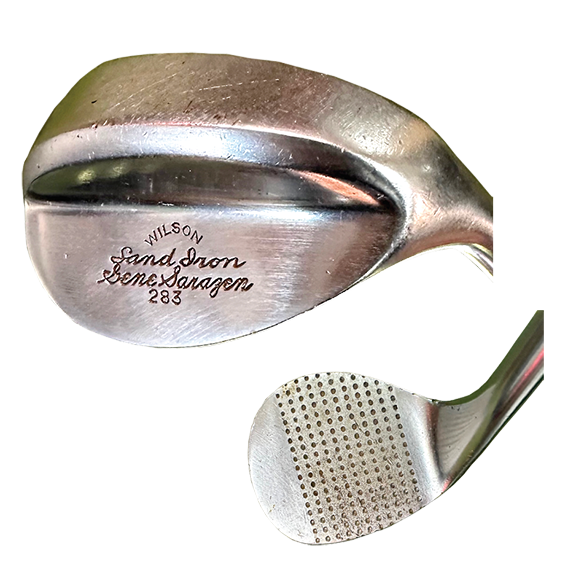
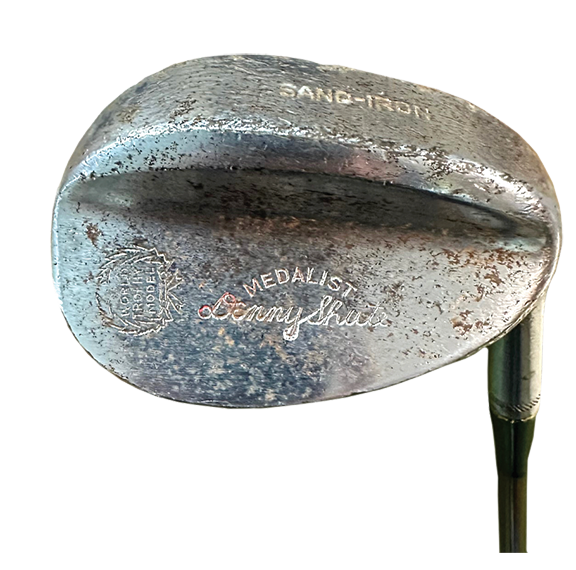
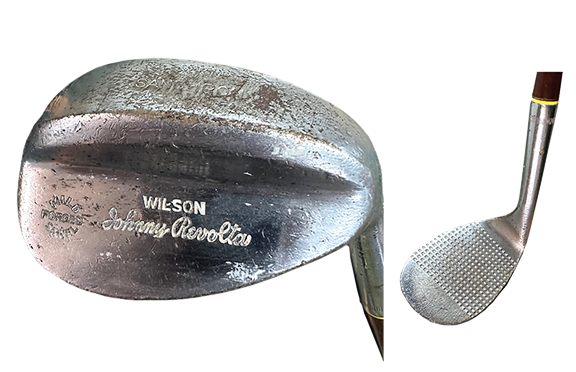
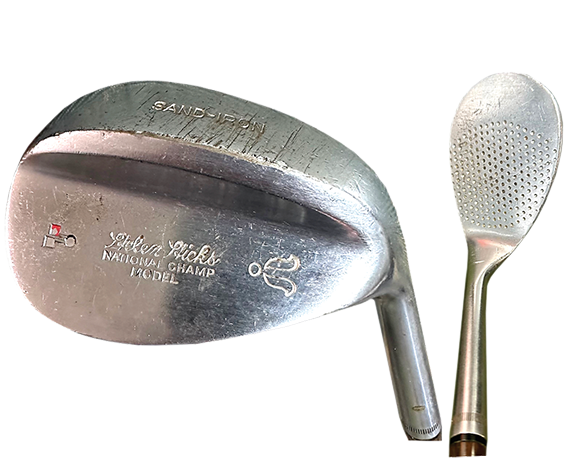
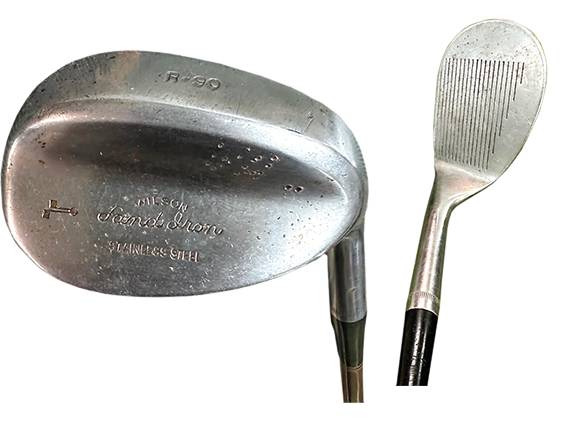
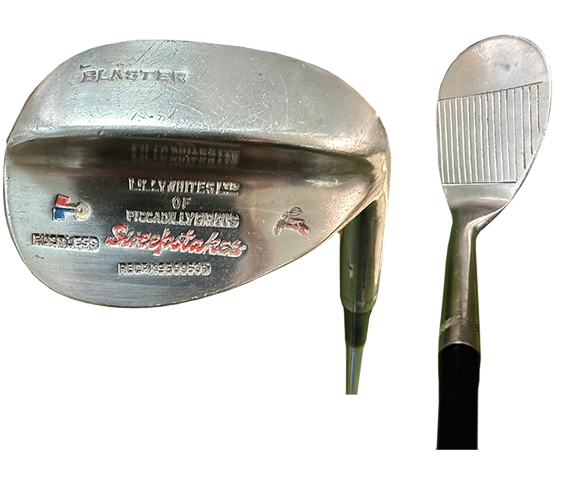
Gene Sarazen 283. One of the famous wedges from this era. This 1933 example is in outstanding condition. Even its reminder leather grip is still intact.Denny Shute Medalist. This example is about the average condition you can expect to find and sometimes more worn as these clubs were cherished and played a lot due to their popularity and playability. Shute won 17 times on the Tour, including three Majors, and was known for his expertise from the sand.Wilson Johnny Revolta. This nice example of a Johnny Revolta is a very early version of the “Highlander Model” or “Championship Model.” Notice the dots were square in shape (same as Denny Shute) and not round. Revolta came on the professional golf scene in 1935 and won five tour events that year (29 career wins) and was especially known for his proficient bunker play. Short game master Paul Runyan said “Revolta led the class of outstanding bunker players by a big margin. His skill from the sand simply left me aghast.” The reason why I collect Revolta, Sarazen, and Hicks wedges is because they are so remarkably entrenched in golf’s history books.Helen Hicks National Champ Model. Lee Trevino made this famous by using it in back-to-back British Open wins, chipping in three or four times. Trevino, one of the best wedge players the tour has ever seen, never thought twice about playing a ladies wedge. Both Sarazen and Trevino said that such wedges were a significant part of their Major wins, statements that began a Wilson wedge craze that lasted for decades. Notice the circular dot pattern, just one of the very cool aspects that collectors love about this model.Wilson R-90 Stainless Steel. Stainless came along later in this period, with fewer produced. This is a rare model.Wilson R-20. This very clean example has a similar head shape to the Hicks and Sarazen models, also with a dot face.Wilson Sweepstakes Blaster. This Wilson wedge really caught my eye when I spotted it – a big flange like the R-20, an R-90 lined face, and it is stainless as well. This was sold in London by Lilly White at their Piccadilly Circus location. The name “SWEEPSTAKES” Blaster with the Wilson flags and a rabbit are stamped on the back. Very unusual and playable.
I was 12 years old when I first saw and learned of the R-20 wedges (and, boy, was I excited) and three years later I got hold of Mike Doherty’s illustrated Classic Club book, which tells the history of these fine collectibles. Just last year I was buying the leftovers of a collection that had been for sale for eight years and still found three Helen Hicks, two Revoltas, two Sarazens, and an R-20, all for a song. I was so excited I thought I was 12 years old again. I wish you all the same excitement as I experience when you are out and about picking and looking to strike gold. – Bobby